
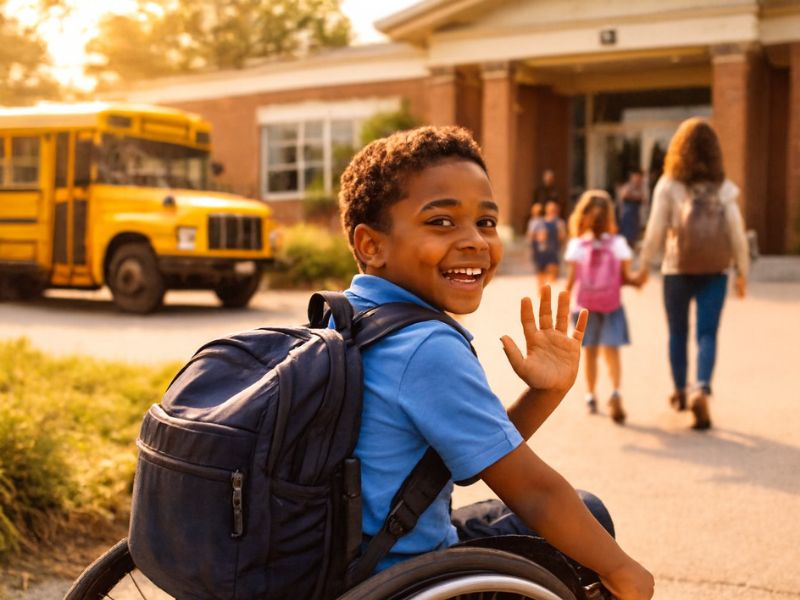
Why meeting diverse learning needs requires more than assistants, funding, or labels
Vancouver, British Columbia, Canada, 22 December 2025 – Across British Columbia, schools are facing a growing challenge: how to truly support students with disabilities and diverse learning needs in a way that is fair, safe, and effective for everyone in the classroom. While awareness has increased and funding levels are higher than ever, many students, teachers, and families say the current system is still falling short.
More than a year after promises were made to place an education assistant, often called an EA, in every kindergarten to Grade 3 classroom, that goal has not yet been fully achieved. Even when an education assistant is present, students do not always receive the kind of support they truly need. Having help on paper does not always translate into meaningful help in real life.
Teachers describe classrooms where students struggle daily because their emotional, behavioral, or learning needs are not being met. When children become overwhelmed, frustrated, or unable to communicate what they need, learning can break down for everyone. Loud outbursts, running away from school, or physical reactions are not signs of bad behavior, but signs of unmet needs.
In many cases, schools simply do not have the training, resources, or specialized staff required to support students with complex needs. Teachers and education assistants often feel unprepared, overworked, and emotionally drained. Some assistants report wearing protective gear to prevent injury, a reality that raises serious questions about safety and well-being in school environments.
For families, the impact can be life-altering. When students are sent home, allowed to attend only part of the day, or told to stay home entirely, parents are left scrambling for childcare or forced to leave their jobs. Children lose access to their legal right to public education and miss critical learning time during key developmental years.
Data collected through family support organizations shows thousands of reported cases each year where students with disabilities are excluded from full participation in school. Exclusion can take many forms, including shortened school days, isolation from peers, or removal from classrooms during moments of distress. While not always intentional, these practices reinforce a painful message that some students do not belong.
One major issue is that support is often tied to formal diagnoses. Many children wait months or even years for assessments, and without a diagnosis, schools receive no additional funding. Even with a diagnosis, funding levels vary widely and may not reflect a student’s actual needs. Students with learning disabilities, attention challenges, or mild to moderate mental health concerns often receive little or no extra support.
Experts and advocates agree that focusing only on funding or the number of education assistants is not enough. What matters most is matching support to the individual child. Some students benefit from one-on-one assistance, while others need flexible teaching methods, quiet spaces, extra time for tasks, or alternative ways to show learning.
There is growing support for team-based approaches inside schools. This includes collaboration between classroom teachers, education assistants, resource teachers, counselors, and therapists. When teachers are trained to support diverse learners and have access to in-class help, students are more likely to stay engaged and regulated.
There is also strong agreement that early intervention makes a difference. Identifying learning and developmental needs early, offering support without long delays, and involving families as partners can prevent many challenges from escalating. Schools that work closely with parents and community organizations often see better outcomes for students.
At the heart of this issue is a simple truth: inclusive education is a right, not a reward. Students should not have to earn access to learning spaces by behaving perfectly or fitting a narrow definition of success. Inclusion works best when schools adapt to students, not when students are expected to adapt to systems that were not designed for them.
As schools continue to navigate teacher shortages, rising classroom needs, and limited resources, the conversation is shifting. The focus is no longer just on how much money is spent, but on how support is designed and delivered. When schools commit to flexibility, collaboration, and understanding, inclusion becomes more than a policy. It becomes a lived reality for every child.



Latest News





We respect your privacy. The email address you provide will be used solely for subscription purposes and will not be stored or shared.
Subscribe Now